A Case for Strategic Policy
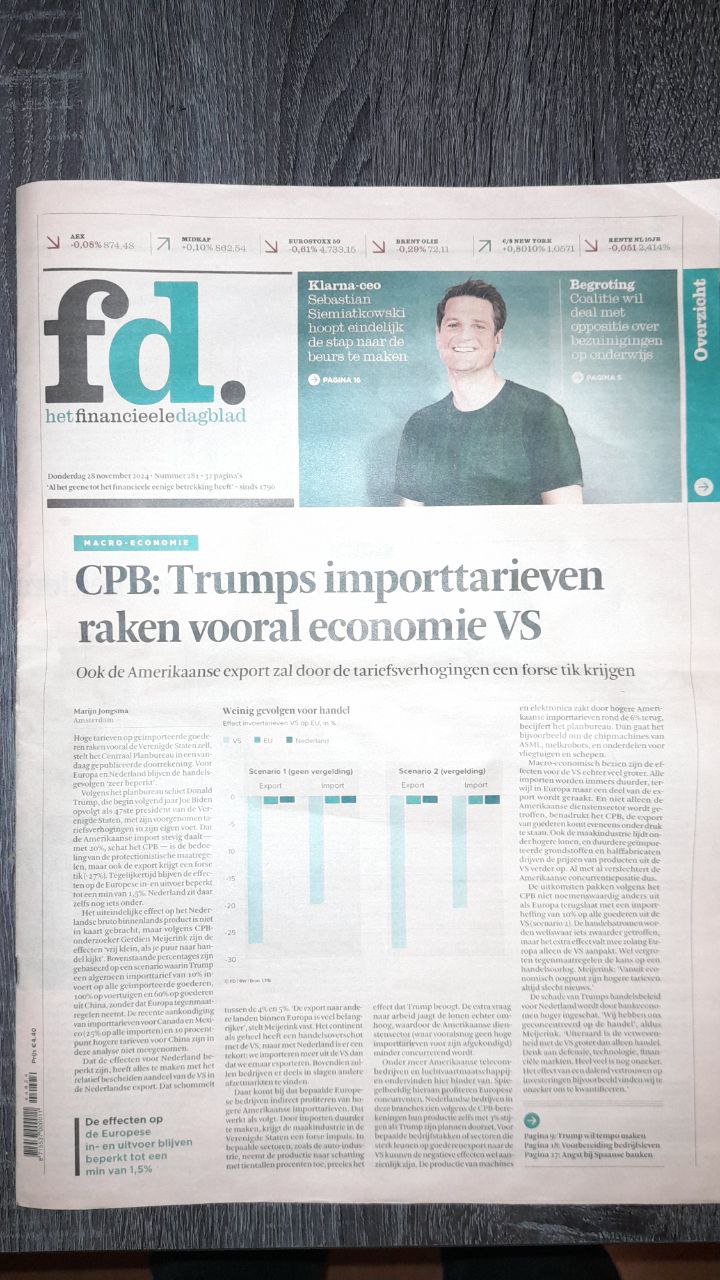
The recent article in the FD on the impact of Trump’s import tariffs uses an analysis by the CPB (Central Planning Bureau) to paint a picture of economic damage to the United States. However, the one-sided approach of the CPB model and the narrative in the article overlook the strategic long-term goals of Trump’s policies. Protectionism, as implemented by Reagan and Thatcher, can foster growth when combined with smart investments and clear economic assets. Trump’s approach avoids many of the classic pitfalls by focusing on structural economic strengthening.
Critique of Protectionism and Geopolitical Risks
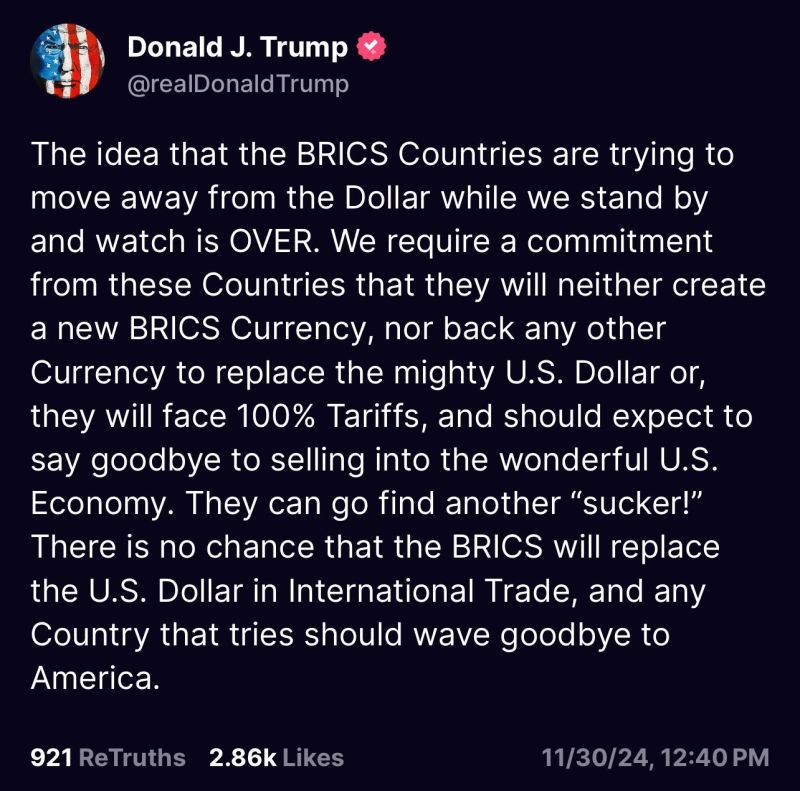
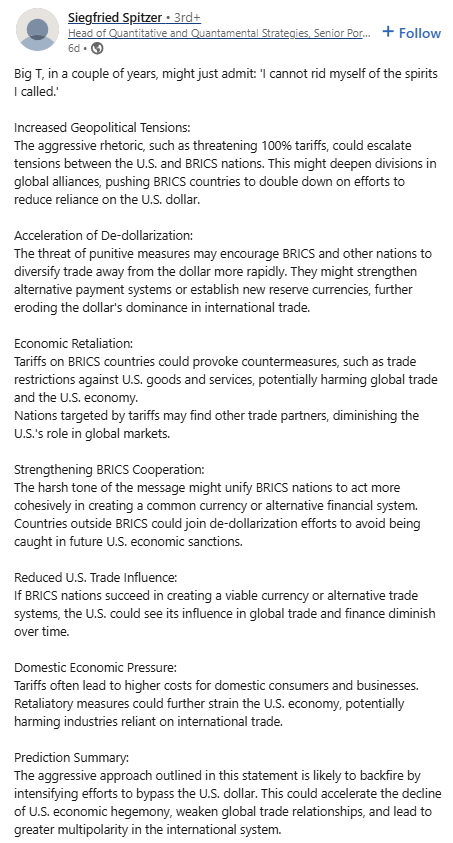
Siegfried Spitzer, Head of Quantamental at Abalone Zeus Solitaire AG, shares his insights on the risks of an aggressive protectionist strategy. Spitzer warns that harsh measures, such as high import tariffs, could accelerate de-dollarization and foster closer cooperation among BRICS nations. This could weaken the U.S. dollar, provoke retaliatory economic measures, and ultimately undermine the U.S.’s role as a central player in global trade.
However, he does not address how the adverse effects of trade restrictions could be mitigated, nor does he clarify how such measures could contribute to a long-term renewal of the American economy. His argument is therefore an example of short-term framing, focusing on immediate risks without considering a broader strategic vision, such as strengthening the dollar through nuclear energy, enhancing purchasing power by fostering growth in the real economy, and leveraging the disruptive innovation of cryptocurrencies.
Protectionism: Lessons from Reagan and Thatcher
Historically, protectionism is often dismissed as harmful, but Reagan and Thatcher proved otherwise. They used strategic measures to strengthen domestic industries and stimulate economic growth:
- Reagan:
- Protected the U.S. technology sector from foreign competition through selective import tariffs.
- Invested heavily in defense and technology, which spurred innovation in Silicon Valley.
- Stimulated economic growth through tax cuts, leading to increased employment and higher purchasing power.
- Thatcher:
- Focused on energy security by reforming the British coal and energy sectors.
- Combined economic protection with structural reforms in the financial sector, turning London into a global financial center.
Trump’s policies show clear parallels with this approach but also introduce unique measures tailored to the challenges of the modern era.
The Assets of Trump’s Policy
Trump’s strategy goes beyond import tariffs; it includes investments in critical sectors that form the foundation for a robust and innovative economy:
- Nuclear Energy: Stable Energy Supply
Nuclear energy offers a reliable and sustainable source of power, reducing the U.S. industry’s dependence on fossil fuels and geopolitically unstable regions. This not only strengthens the U.S.’s competitive position but also ensures economic stability. - Technological Independence: Chips, Semiconductors, and AI
By investing in domestic production of semiconductors and chips, Trump reduces dependence on foreign suppliers like China. In a world where technology forms the core of economic and geopolitical power, this is crucial.Nvidia, as a market leader in AI chips, exemplifies the benefits of this approach. Export restrictions to geopolitical rivals such as China protect strategic technology while stimulating the domestic AI market. Just as Reagan’s policies fortified Silicon Valley, modern strategic protectionism can create technological advantages. Nvidia’s focus on domestic innovation not only supports American companies but also ensures the U.S.’s global dominance in AI technology. - Cryptocurrencies: Financial Innovation
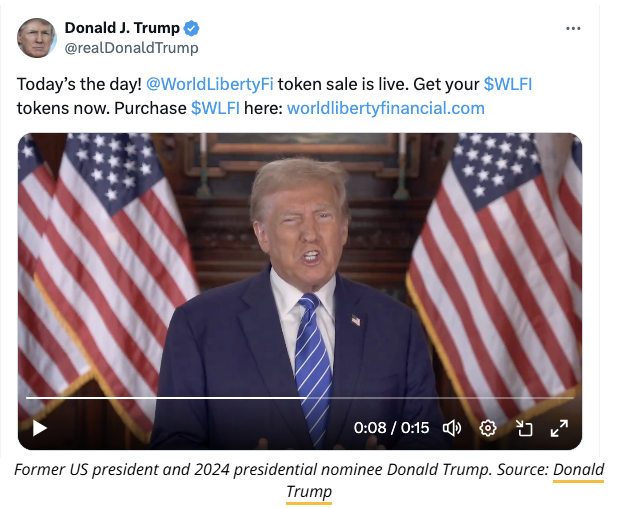
The support for cryptocurrencies and blockchain enhances U.S. financial autonomy. It positions the U.S. as a leader in the decentralized financial world, with the potential to create a new global currency that fosters stability in international trade.Charles Hoskinson, founder of Cardano, has expressed his willingness to collaborate with policymakers, including the Trump administration, to develop crypto regulations. This presents a significant opportunity to support innovative technology within a strategic protectionist framework. Like Reagan’s tax benefits for research and development and Thatcher’s deregulation for economic renewal, such targeted policies can help crypto sectors thrive. By combining protection with targeted investments, the U.S. can solidify its position as a global leader in financial innovation while encouraging competition and growth. - Bitcoin and the U.S. Dollar: A Peg that Combines Stability and Innovation
Cryptocurrencies, especially Bitcoin, go beyond decentralization or financial autonomy. A peg between Bitcoin and the U.S. dollar could create a revolutionary synergy. The U.S. dollar provides stability and trust as the world’s reserve currency, while Bitcoin adds transparency and independence as digital gold.What is often seen as a weakness—the volatility of Bitcoin—can act as a stabilizing factor in a peg. When the dollar faces pressure from inflation or geopolitical tensions, Bitcoin’s flexibility can support the peg’s stability and bolster trust in the financial system. This innovative combination of traditional and disruptive elements could make the American financial system more resilient and set a new standard for international economic cooperation. - Improved Purchasing Power: The Big Mac Index as a Benchmark
The Big Mac Index is a simple, pragmatic method for measuring purchasing power. It compares, for instance, how many Big Macs a single-family home costs. Analysis shows significant differences between 2020 under Trump and 2023 under Biden. Even as far back as 2000 under Bush, the index highlighted disparities. The price of a Big Mac strongly correlates with the cost of a healthy daily meal, providing insights into citizens’ purchasing power.
Predictions based on economic models, such as those by Stiglitz and others, must be validated by real-world measurements. The Big Mac Index offers an accessible and practical method for this, combining rational future models with the understanding that economics is also about people’s direct experiences.
Under Trump, the Big Mac Index showed an increase in purchasing power during his first term. This simple yet effective measure demonstrates that Americans had more disposable income, reflecting real economic growth.
If the real economy grows strongly enough, it can partially or fully offset the downsides of a rising budget deficit, as seen under Trump in 2016:- Higher tax revenues from growth: Thanks to the Tax Cuts and Jobs Act, more resources flowed back into the economy.
- Lower debt ratio pre-COVID-19: The growing economy helped balance the debt-to-GDP ratio.
- Increased employment and purchasing power: The Big Mac Index reflected increased spending power among citizens.
- Strengthened investment climate pre-COVID-19: Robust economic growth attracted more investments, both domestic and international.
- Validating Purchasing Power Growth with Additional Indicators
The Big Mac Index is a straightforward and recognizable way to measure purchasing power, but a more robust analysis requires additional indicators that validate economic performance and purchasing power growth under Trump. Here are several key indicators that support these trends:- 6.1. Real Disposable Income per Household
Why it matters: This measures how much income households retain after taxes and adjustments for inflation, which directly impacts their purchasing power.Data under Trump: During his first term, real disposable income per household grew by an average of 2.3% per year (2017–2019). This was made possible through tax cuts and a strong labor market. - 6.2. Labor Productivity
Why it matters: Higher labor productivity enables businesses to pay higher wages without causing inflation, supporting purchasing power.
Data under Trump: Labor productivity grew by 1.7% per year (2017–2019), exceeding the average of the past two decades. This led to higher incomes without significant increases in costs. - 6.3. Historically Low Unemployment
Why it matters: Low unemployment strengthens workers’ bargaining power and increases wages, which directly benefits purchasing power.
Data under Trump: Unemployment reached a historic low of 3.5% in February 2020, stimulating income growth, particularly for the middle class. - 6.4. Stable Inflation (Consumer Price Index – CPI)
Why it matters: Stable inflation ensures wages are not eroded by rising prices, which is essential for maintaining purchasing power.
Data under Trump: Inflation remained stable around 2% per year, consistent with Federal Reserve objectives and supportive of income growth. - 6.5. GDP per Capita
Why it matters: Gross Domestic Product (GDP) per capita, adjusted for inflation, indicates broader economic prosperity and national purchasing power.
Data under Trump: Real GDP per capita increased by an average of 2% per year (2017–2019), reflecting growing prosperity that benefited households. - 6.6. Household Savings Rate
Why it matters: A higher savings rate means households have more financial flexibility, indicating improved purchasing power.
Data under Trump: The savings rate rose to 7.6% in 2019, demonstrating improved financial stability among households.
- 6.1. Real Disposable Income per Household
What the FD, CPB, and Siegfried Spitzer Intentionally Overlook
The FD article and CPB analysis fail to address critical dimensions of Trump’s policies. Their focus remains confined to traditional trade models and short-term impacts, while broader strategic goals are left out of the picture. Siegfried Spitzer shares these limitations in his analysis. Although he highlights the risks of protectionism, such as de-dollarization and geopolitical tensions, he fails to acknowledge the broader benefits of Trump’s policies or to explain how risks can be offset by long-term rewards. An example of this is how El Salvador has accumulated Bitcoin as public goods, fostering economic growth and financial autonomy.
Here are some key oversights:
- Long-Term Strategy
The CPB model does not consider structural investments in energy, technology, and finance—pillars essential for sustainable economic growth. - Strategic Context
The geopolitical importance of tariffs, such as enhancing the U.S.’s bargaining position, is entirely overlooked. - Bias (false consensus effect)
By presenting protectionism as inherently harmful, a skewed narrative emerges that conceals the benefits of Trump’s strategies. - Missing Economic Dynamics
Key elements such as technological independence, energy security, and the disruptive potential of cryptocurrencies are excluded from the analysis, despite their crucial role in shaping the future of the U.S. economy.
Why Trump’s Protectionism Works
One significant aspect entirely missing from the FD’s analysis is Trump’s fiscal policy, which is closely tied to his trade strategy. The Tax Cuts and Jobs Act played a crucial role in stimulating economic growth by reducing taxes for both businesses and individuals, leading to increased employment and higher purchasing power. While the debt ratio initially appeared to rise, economic growth partially offset the growing budget deficits. Historical precedents, such as during Reagan’s presidency, demonstrate that a smart combination of fiscal stimulus and strategic trade measures can mitigate or even eliminate the negative effects of import tariffs. By failing to consider this interplay, the FD presents an incomplete and one-sided view of the overall impact of Trump’s policies.
Trump’s policy is more than just protectionism; it is a long-term strategy grounded in proven principles. Like Reagan and Thatcher, Trump emphasizes domestic strengthening, but he adds modern dimensions to address the challenges of the 21st century:
- Innovation as a Growth Engine
Semiconductors, nuclear energy, and cryptocurrencies are not traditional sectors, but they form the backbone of the 21st-century economy. By focusing on these, Trump enhances the U.S.’s technological and economic lead. - Stability Through Energy Security
Nuclear energy not only provides a competitive advantage but also makes the U.S. less vulnerable to external shocks such as oil price fluctuations or geopolitical conflicts. - Increased Purchasing Power
The Big Mac Index demonstrates that Trump’s policies are not only focused on businesses but also on the daily lives of citizens. The increase in purchasing power reflects a stronger domestic market.
Additional indicators show that the rise in purchasing power under Trump was not only visible in the Big Mac Index but was also supported by broader economic trends such as rising incomes, low unemployment, stable inflation, and growing GDP per capita. Together, these data strengthen the argument that Trump’s policies have significantly improved the purchasing power of American households.
A More Complete Picture
Protectionism is not an end in itself but a means to restore structural economic strength. Reagan and Thatcher proved that this approach can work, and Trump builds on their lessons. His key assets—nuclear energy, technology, and financial innovation—demonstrate that protectionism can be effective when combined with a clear vision and long-term investments.
The CPB and FD fail to capture these nuances. Their focus on short-term models provides a limited perspective and reinforces a narrative that reduces protectionism to an economic pitfall. The reality, however, is that Trump’s policies not only address current challenges but also lay the foundation for future growth.
Conclusion: Protectionism in Modern Times
The FD article and Siegfried Spitzer’s arguments illustrate how a narrow frame can lead to a misleading analysis. Trump’s protectionism avoids classic pitfalls by investing in assets that promote economic stability and innovation. Like Reagan and Thatcher, Trump shows that strategic protectionism can work, provided it is part of a broader vision.
However, the discussion cannot stop here. The unique potential of a peg between Bitcoin and the U.S. dollar represents a groundbreaking synergy between two worlds: the stability of the U.S. dollar as the global reserve currency and the transparency and independence of Bitcoin as digital gold. For decades, the U.S. dollar has offered predictability and trust in international trade, while Bitcoin’s decentralized structure and scarcity symbolize a revolutionary redefinition of value and ownership. A peg could unite these qualities, preserving the dollar’s role as the stable backbone of the global economy while equipping the system with unbreakable transparency and resilience against manipulation by central authorities.
This innovative model could lay the foundation for a new economic order, one that enables a more inclusive and resilient financial system. By combining stability with independence, it paves the way for enhanced global economic participation and purchasing power.
Ultimately, this approach is not just about responding to today’s challenges but about driving the most logical path toward a disruptive, revolutionary transformation for higher well-being and prosperity. This vision embodies the essence of a new renaissance, where stability, transparency, and innovation converge to redefine economic systems and empower humanity to achieve unparalleled growth and equality.
The current world order is on the brink of major geopolitical and economic changes, whether or not de-dollarization occurs. Cryptocurrencies are here to stay, and instead of resisting this transformation, the logical step would be to embrace it. Distributing Bitcoin as a proxy for the flux of other cryptocurrencies could democratize access to financial innovation, ensuring that the benefits of this economic revolution are shared equitably among the people.
In a world that yearns for peace and enduring relationships, such a transformation becomes essential. We must avoid the pitfalls of perpetual money printing by an elite of families and their networks, as seen over the past century with the Federal Reserve. This long-term vision can bring all people together through the fair exchange of goods and services, ultimately fostering mutual acceptance and harmony, regardless of differences in color or creed. By embracing crypto, communities and individuals can take responsibility for meeting their own needs while respecting their environment. Communities work together with financial authorities to create legal frameworks that ensure both participants and non-participants benefit fairly, enabling sustainable growth for everyone.
 Dwyte
Dwyte 
Plaats een reactie